Home›Impact›Our Impact›

Ambition, turned into impact

We drive tangible change in line with global environmental priorities — protecting ecosystems, empowering communities, and shaping a sustainable future for all.

The numbers, live from the field

Our global footprint

50+
Countries across 5 continents where our data has been collected

1,396
Protected areas represented, totalling 3,008,718 km²
1,030
Species being monitored to date
59%
Of our data points sit in or within 50km of Indigenous community lands
65,904
Track images currently in processing
Connecting AI and TEK

Watch our inspiring emmy-award winning video from the field

Using non-invasive AI technology, expert trackers, and Traditional Ecological Knowledge (TEK), WildTrack is making steps towards protecting our precious biodiversity.

Partnerships in practice

Elders teaching the next generation to read the ground...

WildTrack has partnered with Indigenous communities across the globe including the Kurichiya and Kuruma of South India, the Tharu of Nepal, the Basarwa (San) of Botswana, the Arara and Kayapó of the Brazilian Amazon's Iriri River, the Shona and Ndebele of Zimbabwe, the Damara and Nama of Namibia, and the Yao of Mozambique, among others. Through our programs, Indigenous elders pass on tracking skills to youth — ensuring traditional knowledge continues to guide scientific understanding, generation after generation.
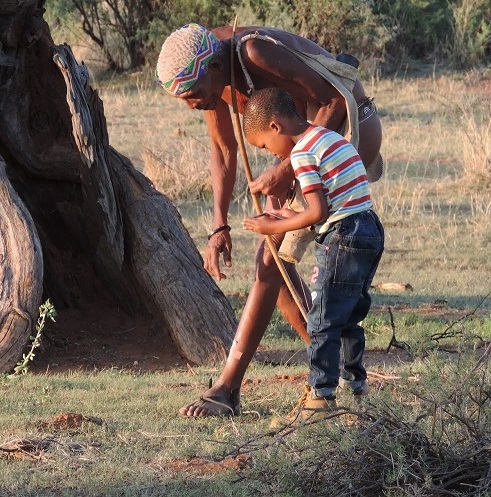
An indigenous tracker teaching a child to read footprints
Our commitment

We work toward five United Nations Sustainable Development Goals.

Every footprint we help collect and identify feeds back into targets set on a global scale — reduced inequality, climate action, life on land, strong institutions, and partnership across borders.

The UN Sustainable Development Goals

Five goals, one non-invasive approach

Each Sustainable Development Goal maps to something WildTrack already does in the field — not a separate initiative, but the outcome of the same footprint-based work everywhere it happens.

10

Reduced Inequalities

We empower local communities to lead in species conservation — not just as data collectors, but as experts who interpret and apply that knowledge. Valuing Traditional Ecological Knowledge (TEK) helps redress centuries of cultural marginalisation.

13

Climate Action

As the climate shifts, species are forced into higher or cooler habitats, changing where they range. Documenting those movements generates insight into climate impact and guides strategies to protect wildlife and ecosystems together.

15

Life on Land

Our non-invasive footprint identification technology gives conservation teams precise, data-driven metrics — monitoring species safely, without the stress or disturbance of handling, in support of terrestrial biodiversity.

16

Peace, Justice & Strong Institutions

Our work is inherently multidisciplinary, built on collaboration across ethnic, religious, and national lines. Placing TEK at the centre of biodiversity monitoring helps build inclusive, accountable institutions for conservation.

17

Partnerships for the Goals

Indigenous peoples bring generations of expertise to biodiversity conservation. Our partnerships turn local tracking knowledge into global scientific data — and strengthen the case for protecting it.